

Imagine a single quality of character so powerful that it can quietly change the course of history, protect a person from self-destruction, and — according to Islamic belief — draw the nearness and companionship of God Himself. In Islam, that quality is called taqwa.
Most English translations use words like “God-consciousness,” “piety,” “righteousness,” or “fear of God.” Linguistically, the term denotes saving or protecting oneself. A more straightforward way to understand it is this: Taqwa is doing the right thing even when no one is watching — and even when no one will ever know — simply because you know God sees and cares. It is integrity taken to its deepest level. It lets our inner compass guide us to be honest, kind, and honorable in public and in private.
More than 1,400 years ago, in the city of Medina, the second leader of the Muslim community, Umar ibn al-Khattab, used to walk the streets at night to ensure his people were safe and cared for. One night, he overheard a conversation inside a home. A mother was telling her daughter to mix water into the milk they would sell the next morning — a common way at the time to cheat customers and make extra profit. The daughter answered: “Mother, the Khalifa (spiritual leader) has forbidden mixing water with milk.” The mother replied: “Do it anyway. Umar isn’t here.” But the young woman replied: “By God, if Umar cannot see me, the Lord of Umar can see me. I will not obey Umar in public and disobey him in private.” Umar was deeply moved. The next day, he found out that the young woman was unmarried. He married her to one of his sons. Generations later, amongst their descendant came Umar ibn Abdul Aziz — one of the most just and beloved rulers in Islamic history, often called the “fifth rightly guided caliph.” One quiet act of honesty in the dark planted a seed that eventually produced extraordinary goodness for an entire nation. That is the hidden power of taqwa.
Early Muslim teachers used vivid images to explain taqwa to ordinary people. Hadhrat Abu Hurairah (ra) described it as walking carefully along a path littered with thorns, taking care to avoid harm.
A classical poet, Ibn al-Mu’tazz, presented a similar definition when he stated:
Leaving sins, both small and great; that is taqwa (piety), Adopt the way of one who walks on thorny ground, carefully avoiding the dangers he sees, Do not consider a small sin to be insignificant, for mountains are made of pebbles. [1]
In other words, taqwa is not about being perfect; it is about being careful while aspiring to perfection
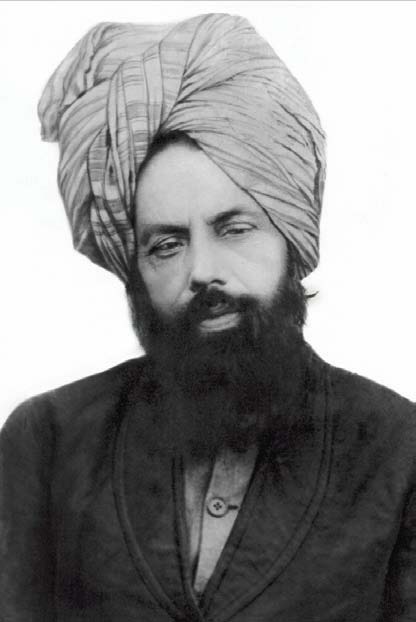
In 1901, Hazrat Mirza Ghulam Ahmad of Qadian, who claimed to be the Promised Messiah and Reformer of the Latter Days, composed a couplet in the Urdu language while writing about moral excellence:
The root of every good deed is taqwa. If this root stays healthy, everything else stays healthy. [2]
He repeated this couplet on various occasions to his followers, explaining that all spiritual and moral progress grows from this single root. You can pray, give charity, and fast, but if those actions are not rooted in sincere taqwa — in a genuine desire to please God rather than to impress people — they lose their value and in fact become a source of sorrow. He taught that real taqwa is never selective. Choosing to be honest in business but harsh at home, or kind to strangers but unfair to family, is like a starving person proudly eating one grain of rice. True taqwa covers every area of life. [3]
In an age of hidden cameras, online anonymity, and “nobody will ever know” temptations, taqwa is a reminder that character is what we do when the room is completely dark and the door is locked. It is in our quiet struggles and hidden battles that a true relationship with God is forged. The Promised Messiah (as) powerfully explained the necessity of righteousness for spiritual progress in his work Noah’s Ark:
“Bear well in mind that no action of yours, which is empty of righteousness, can reach God. Righteousness is the root of all goodness, and no action rooted in righteousness will ever go in vain. It is inevitable that you will also be tried with various forms of anguish and misfortune, just as the faithful before you were tried. Be on your guard, lest you should falter. So long as you have a firm relationship with heaven, the earth can do you no harm. Whenever harm befalls you, it will come from your own hands and not from the hands of your enemy.” [4]
May all of us nurture that delicate root of Taqwa in our own lives, one careful step at a time.
References:
- Ibn Kathīr, under Surah al-Baqarah, verse 3
- Tadhkira, English, pgs. 554-555. Referenced from al- Hakam, vol.5, no.32, August 31, 1901, p.13.
- Adapted from Malfuzat, vol. 9 Eng, pgs. 237-238
- Noah’s Ark, Eng. Pg. 25


Leave a Reply