
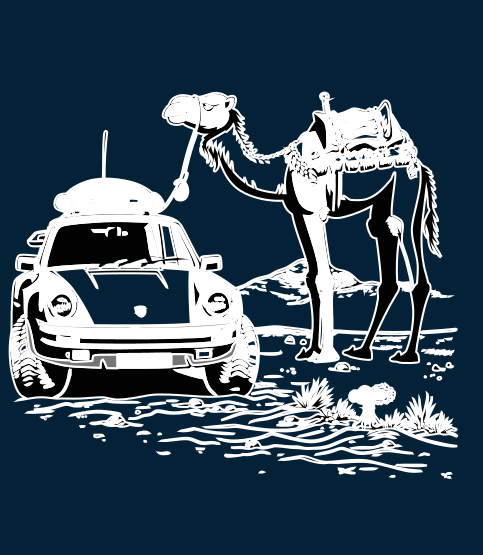
‘Allah reminds us throughout the Quran that animals were created as essential companions and instruments for human mobility, livelihood, and beauty:
‘And of the cattle He has created some for burden and some for slaughter. Eat of that which Allah has provided for you, and follow not the footsteps of Satan. Surely, he is to you an open foe.’ (1)
‘And proclaim unto mankind the Pilgrimage. They will come to thee on foot, and on every lean camel, coming by every distant track,’ (1) And He has created horses and mules and asses that you may ride them, and as a source of beauty. And He will create what you do not yet know. (1)
“Make the Ark under Our eyes and according to Our revelation.” (1)
For millennia, these divine provisions–camels, horses, oxen, and donkeys–formed the backbone of human mobility. They carried people across deserts, mountains, and continents; they powered trade, pilgrimage, and daily life. The Holy Quran acknowledges both their practical value and their aesthetic beauty, while also hinting at future creations: “what you do not yet know.” Human history unfolded exactly in this pattern. The shift away from animal–powered transport was gradual, not sudden–an unfolding series of technological breakthroughs that Allah allowed humanity to discover over time. The following timeline presents the major inventions that replaced animal transport, supported by authoritative historical sources.
Earliest Boats and Ships (before 2500 BCE)
Humans used dugout canoes as early as 8000–6000 BCE, and simple boats emerged around 3500-3000 BCE in Egypt and Mesopotamia, long before the wheel was introduced.
3500–3000 BCE The Wheel (Mesopotamia)
The earliest known wheel enabled carts and wagons, transforming land transport. Although still pulled by animals, this invention laid the foundation for all later mechanized systems. It allowed humans to move far heavier loads than animals could carry on their backs and created the foundation for all later mechanical systems.(2)
1769 The First Self–Propelled Steam Vehicle
French inventor Nicolas–Joseph Cugnot built a steam–powered tricycle capable of moving without animals–the first true break from animal transport. This invention showed for the first time that machines could generate their own forward motion, opening the door to fully mechanized travel. (3)
1804 The First Steam Locomotive (United Kingdom)
Richard Trevithick demonstrated the first working steam railway engine, initiating a transportation revolution. This innovation allowed far heavier loads and much higher speeds than animal drawn carts, and it introduced a new era of long distance land travel built on mechanical power rather than animal strength. (4)
1807 The First Practical Steamship
Fulton’s steamboat introduced powered water travel, replacing wind-dependent sailing and transforming global transport and migration.
1825 The First Public Railway (Stockton–Darlington)
This railway, powered by George Stephenson’s locomotives, marked
the beginning of commercial rail transport. Railways rapidly replaced
long–distance camel and horse caravans for trade, offering predictable schedules, greater capacity, and uninterrupted travel across regions. (5)
1860–1876 The Internal Combustion Engine
Early engines by Étienne Lenoir (1860) and the improved Otto cycle engine (1876) made practical motor vehicles possible. These engines were smaller, lighter, and more efficient than steam engines, enabling vehicles that could operate independently of tracks or fixed routes. (6)
1885–1886 The First Automobile
Karl Benz patented the Benz Patent–Motorwagen, the first modern car. Within decades, automobiles replaced horse–drawn carriages in cities worldwide. Unlike railways, which were bound to fixed lines, automobiles could travel wherever roads existed, giving individuals direct, flexible mobility and gradually replacing horse drawn carriages in cities around the world. (7)
1903 The First Powered Airplane
The Wright Brothers achieved sustained, controlled flight, opening the era of air transport. Airplanes made it possible to cross continents and oceans in hours rather than weeks, breaking the limitations of land based travel entirely. (8)
1907 First human lifting helicopter experiments (France)
Paul Cornu achieved the first brief, crewed free flight–about one foot high for roughly twenty seconds. This early experiment demonstrated that vertical lift was possible and laid the groundwork for future helicopter development.(9)
1908 Mass Produced Cars (Ford Model T)
Henry Ford’s assembly line production made cars affordable for ordinary families. This shift accelerated the disappearance of animal powered transport in urban areas, as millions of people gained access to personal motor vehicles. (10)
1920s–1930s Motorized Trucks Replace Camel Caravans
In the Middle East, Africa, and South Asia, motor trucks and buses replaced camel caravans for freight and passenger movement. These vehicles carried heavier loads, traveled faster, and operated day and night, transforming regional trade and travel. (11)
1936 First Practical, Controllable Helicopter
The Focke Wulf Fw 61 became the world’s first fully controllable helicopter. Unlike airplanes, helicopters could take off and land vertically, reach remote areas, and hover in place, making them uniquely suited for rescue, medical, and military operations. (12)
1939 First Flight of Sikorsky’s VS 300 (USA)
Igor Sikorsky’s VS 300 made its first tethered flight on September 14, 1939. This design introduced the now standard single main rotor with tail rotor configuration, proving that helicopters could be stable, reliable, and practical. (13)
1940 First Free Flight of Sikorsky’s Helicopter
Sikorsky’s helicopter achieved its first free flight in May 1940, demonstrating full control in the air and establishing the foundation for modern helicopter design.
1950s Diesel Railways and Modern Highways
Diesel locomotives and expanding highway networks completed the transition away from animals for long–distance travel. At the same time, expanding highway networks connected cities and regions, completing the transition away from animals for long distance land travel. (14)
1960s–Present Jet Travel and High–Speed Rail
Jet aircraft (Boeing 707, 1958) and high–speed trains (Japan’s Shinkansen, 1964) eliminated any remaining reliance on animal transport for intercity travel. Speeds increased dramatically, and journeys that once took days could now be completed in hours, reshaping global mobility. (15)
1970s–2000s Expansion of Electrified Rail System
Across Europe and Asia, national railways rapidly replaced diesel with electric traction. Electrified mainlines enabled faster, cleaner, and more efficient travel, reducing dependence on fossil-fuel locomotives and setting the stage for modern high-speed rail connectivity. (15b)
1969 First Human Moon Landing
NASA’s Apollo 11 mission achieved the first crewed landing on the Moon, marking a historic leap in human mobility and exploration. Though not a form of daily transport, it demonstrated humanity’s ability to leave Earth entirely and remains the furthest extension of human travel to date. (16)
2000–Present Zero-emission Rail Technologies
Battery-electric, hydrogen fuel-cell, and hybrid locomotives emerged as the successors to diesel in the 21 century. These systems use advances in electric tractions, power electronics, and high-capacity batteries to reduce emissions and improve efficiency. Together, they represent the moder shift toward sustainable, low-carbon rail transport. (16b)
1990s–Present Unmanned Aerial Vehicles (Drones)
Pilotless aircraft became tools for mapping, agriculture, delivery, surveillance, and disaster response. Drones can reach dangerous, remote, or confined areas where helicopters and airplanes cannot operate safely. (17) Advances in GPS, sensors, and lightweight cameras turned drones into essential instruments for environmental monitoring, infrastructure inspection, and humanitarian aid. Modern militaries also rely heavily on UAVs for intelligence, surveillance, and precision operations, reflecting their central role in contemporary defense. (18)
2015–Present Self Driving Vehicles and Robotaxi
AI powered vehicles capable of navigating without human input represent a new stage in transport history. These systems promise safer roads, reduced accidents, and greater accessibility for elderly and disabled individuals, continuing humanity’s long journey toward automation. (19) By the mid‐2020s, companies such as Waymo, Tesla, and Uber began deploying commercial robotaxi services in some major U.S. cities, showing that autonomous vehicles were transitioning from controlled trials to real‐world public use. (20)
2021–First Powered Flight on Another Planet
NASA’s Ingenuity helicopter completed first powered, controlled flight on another planet, proving that aerial mobility is possible beyond Earth. This breakthrough opened the door to future planetary exploration using drones and autonomous aircraft. Ingenuity operated alongside the Perseverance rover, continuing the long tradition of wheeled robotic mobility on Mars established by earlier rovers such as Curiosity. (21)(22)
2021– First All-Civilian Orbital Space Mission
SpaceX’s Inspiration4 mission launched the first crew of private civilians into Earth orbit, demonstrating that commercial space travel had become technologically possible and expanding human mobility beyond Earth for non-astronauts. This milestone opened the door for other companies to follow. (23)
2026 First Crewed Lunar Mission Since Apollo
NASA’s Artemis II mission launched four astronauts on a ten-day journey around the Moon, marking the first human lunar voyage in more than fifty-years and testing the Space Launch System and Orion for future Artemis landings. China also plans its first crewed lunar landing around 2030, signaling a new era of international human mobility beyond Earth. (24)
The replacement of camels and other animals in transportation was not a single invention but a long, 4,000–year arc of innovation culminating in the last 150 years. From the wheel to the jet engine, each breakthrough steadily reduced humanity’s dependence on animal labor and reshaped global mobility, as steam engines, railways, automobiles, and aircraft collectively transformed the world from animal power to mechanical speed, efficiency, and global connectivity. Our Lord has already shared in the Holy Quran about the foundation of transportation shown in the verses cited earlier.
References:
1. The Holy Qur’an. 6:143; 22:28; 16:9; 23:28
2. Usher, A. P. (1954). A history of mechanical inventions. Harvard University Press. https://www.worldhistory.org/article/1859/mesopotamian-inventions/
3. Bagwell, P., & Lyth, P. (2002). The transport revolution, 1770–1985. Routledge. https://www.newworldencyclopedia.org/entry/Nicolas-Joseph_Cugnot
4. Lee, C. E. (1963). The railway age. Allen & Unwin. https://museum.wales/blog/1012/Richard-Trevithickrsquos-steam-locomotive/
5. Historic England. (n.d.). A brief overview of the Stockton & Darlington Railway. https://historicengland.org.uk
6. Usher, A. P. (1954). A history of mechanical inventions. Harvard University Press.
https://historicengland.org.uk/whats-new/research/a-brief-overview-of-the-stockton-and-darlington-railway/
7. Flink, J. J. (1990). The automobile age. MIT Press. https://group.mercedes-benz.com/company/tradition/company-history/1885-1886.html
8. Heilbron, J. L. (Ed.). (2003). The Oxford companion to the history of modern science. Oxford University Press.
https://airandspace.si.edu/collection-objects/1903-wright-flyer/nasm_A19610048000
9. The Wright Experience. (n.d.). When were helicopters invented? https://www.wrightexperience.com/when-were-helicopters-invented/
10. Britannica. (n.d.). Model T: Description & facts. https://www.britannica.com/technology/Model-T
11. Bulliet, R. W. (1975). The camel and the wheel. Columbia University Press. https://journals.openedition.org/histcrit/13467?lang=en
12. Wikipedia. (n.d.). Helicopter. In Wikipedia, the free encyclopedia. Retrieved March 20, 2026, from https://en.wikipedia.org/wiki/Helicopter
13. Executive Flyers. (n.d.). When was the helicopter invented https://executiveflyers.com/when-was-the-helicopter-invented/
14. Bagwell, P., & Lyth, P. (2002). The transport revolution, 1770–1985. Routledge. https://www.american-rails.com/diesel.html
15. Heilbron, J. L. (Ed.). (2003). The Oxford companion to the history of modern science. Oxford University Press. http://www.aviation-history.com/boeing/707.html 15b.
Railway electrification. (2024, March 20). In Wikipedia.
https://en.wikipedia.org/w/index.php?title=Railway_electrification&oldid=1213456789
16. NASA. (2015, April 17). Apollo 11 mission overview. NASA. https://www.nasa.gov/history/apollo-11-mission-overview/ 16b. ABB. (2019). Historical perspective:
Electrifying history. ABB Group. https://library.e.abb.com/public/f01fce2f2dad4b238ea3b3ca998c7a3e/16-23%204m6035_EN_72dpi.pdf
17. Wikipedia contributors. (2026). History of unmanned aerial vehicles. In Wikipedia, The Free Encyclopedia.
https://en.wikipedia.org/wiki/History_of_unmanned_aerial_vehicles
18. Defense One. (2024). U.S. soldiers will get electronic‐warfare backpacks later this year.
https://www.defenseone.com/technology/2024/07/us-soldiers-will-get-electronic-warfare-backpacks-later-year/397798/
19. Science News Today. (2024). The Future of Self‐Driving Cars and Autonomous Vehicles.
https://www.sciencenewstoday.org/the-future-of-self-driving-cars-and-autonomous-vehicles
20. Matousek, M. (2025). Robotaxi locations in U.S. cities: Tesla, Waymo, Uber, and the 2025 rollout. Business Insider.
https://www.businessinsider.com/robotaxi-locations-us-cities-tesla-waymo-uber-2025-12
21. NASA. (2021, April 19). NASA’s Ingenuity Mars helicopter succeeds in historic first flight. NASA.
https://www.nasa.gov/news-release/nasas-ingenuity-mars-helicopter-succeeds-in-historic-first-flight/
22. Astroway, S. (2025, November 23). Mars rovers: From Curiosity to Perseverance. Orbital Xploration.
https://orbitalxploration.com/mars-rovers-from-curiosity-to-perseverance
23. SpaceX. (2021). Inspiration4. SpaceX. https://www.spacex.com/launches/inspiration4
24. NASA. (2026, April 1). Liftoff! NASA launches astronauts on historic Artemis Moon mission.
https://www.nasa.gov/news-release/liftoff-nasa-launches-astronauts-on-historic-artemis-moon-mission/



Leave a Reply